Fall Rental Property Maintenance Checklist for Managers
A climate-adaptable fall checklist for exterior drainage, heating readiness, weather sealing, life-safety devices, grounds, resident notices, and records. This fall rental property maintenance checklist gives the team a clear starting point, owner, record, and finish line.
A single open task can expose a larger weakness in fall seasonal maintenance: incomplete intake, unclear authority, a missing handoff, or a status that no one can verify. The practical fix is not a longer policy. It is a visible operating path that helps the next person make the right decision and understand what has already happened.
This article offers general educational information about fall seasonal maintenance, not legal, tax, financial, insurance, engineering, or other professional advice. Adapt the workflow to the property, approved company procedures, contracts, and applicable requirements.
What a reliable outcome looks like
The operating goal of the fall rental property maintenance checklist is to prepare building systems and grounds for local fall and winter conditions before urgent demand rises. Write that outcome at the top of the procedure. A clear outcome prevents the checklist from becoming a collection of tasks that are easy to mark complete but do not solve the underlying management problem.
Set the scope as well. Identify the properties, teams, systems, and situations included. Name meaningful exclusions and the escalation path for work that falls outside the normal process. A limited first version is easier to test than a complicated workflow intended to cover every possible exception.
See the decision path in context
A generic checklist may say to winterize every exterior connection, but the actual scope depends on the fixture, building design, and climate. The manager assigns the property-specific method to a qualified party and records completion.
The useful lesson is not that every similar situation will have the same outcome. It is that the team can use the same intake, decision ownership, record, and follow-up structure. Consistency supports better handoffs while still leaving room for property-specific facts and qualified judgment.
Information to confirm before work begins
Good decisions depend on consistent inputs. The intake should be short enough to complete during real work but specific enough that the next person does not need to reconstruct the situation. For this workflow, begin with:
- Local climate and freeze exposure.
- Building systems and past seasonal failures.
- Vendor lead times.
- Resident and owner responsibilities.
Mark unknown information as unknown and assign follow-up. Do not fill gaps with assumptions merely to complete a form. If a missing fact changes safety, authorization, cost, access, or compliance, the procedure should stop or escalate until the responsible person reviews it.
Build the fall rental property maintenance checklist workflow
1. Adapt the checklist
Remove irrelevant tasks and add location-specific storm, freeze, heating, drainage, wildfire, or landscaping items based on qualified local input.
For this step, define who makes the decision, where the result is recorded, and what condition moves the work forward. If an exception changes the normal path, record the reason and the next review point rather than relying on memory.
2. Review roofs and drainage
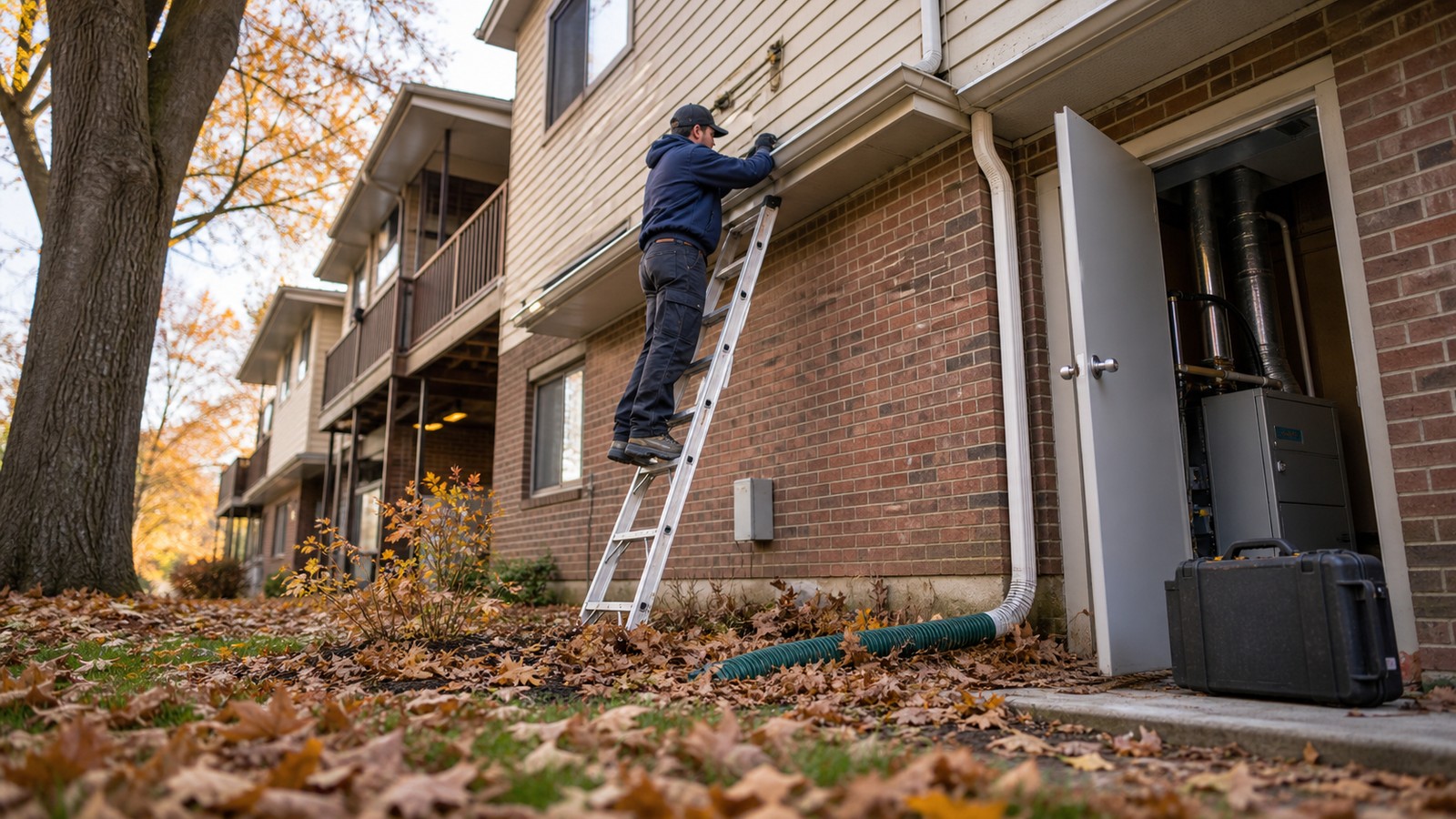
Observe accessible exterior conditions, clear approved drainage points, and route roof work to trained, properly equipped professionals.
For this step, define who makes the decision, where the result is recorded, and what condition moves the work forward. If an exception changes the normal path, record the reason and the next review point rather than relying on memory.
3. Prepare heating systems
Schedule appropriate inspection or service, confirm controls and filters, and document unresolved conditions before peak demand.
For this step, define who makes the decision, where the result is recorded, and what condition moves the work forward. If an exception changes the normal path, record the reason and the next review point rather than relying on memory.
4. Check weather exposure
Review visible seals, penetrations, exterior fixtures, hose connections, and vulnerable piping according to the building and climate.
For this step, define who makes the decision, where the result is recorded, and what condition moves the work forward. If an exception changes the normal path, record the reason and the next review point rather than relying on memory.
5. Verify life-safety routines
Follow approved testing and replacement procedures for installed alarms and other safety equipment; do not substitute a blog checklist for code requirements.
For this step, define who makes the decision, where the result is recorded, and what condition moves the work forward. If an exception changes the normal path, record the reason and the next review point rather than relying on memory.
6. Coordinate grounds
Plan leaf, branch, irrigation, snow-equipment, lighting, and slip-risk work with clear property and vendor assignments.
For this step, define who makes the decision, where the result is recorded, and what condition moves the work forward. If an exception changes the normal path, record the reason and the next review point rather than relying on memory.
7. Communicate with residents
Send concise, timely information about access, temperature expectations, reporting channels, and any approved resident tasks.
For this step, define who makes the decision, where the result is recorded, and what condition moves the work forward. If an exception changes the normal path, record the reason and the next review point rather than relying on memory.
8. Close and monitor
Record completion, defer with a reason and date, and watch early-season service reports for missed patterns.
For this step, define who makes the decision, where the result is recorded, and what condition moves the work forward. If an exception changes the normal path, record the reason and the next review point rather than relying on memory.
Make every handoff understandable
The record created by the fall rental property maintenance checklist should explain the work without requiring access to one employee's memory or personal inbox. Use approved systems and access controls, collect only information the process needs, and connect related records rather than copying sensitive details into multiple places.
At minimum, consider capturing:
- Property-specific seasonal scope.
- Assigned role or vendor.
- Service and inspection dates.
- Resident notice.
- Photos or completion notes.
- Deferral and follow-up date.
Completion should be a defined state. A sent email, created task, dispatched vendor, or drafted document may be progress, but none automatically proves that the intended result occurred. State what evidence closes the item and what happens when the evidence is missing.
Test the workflow under real conditions
Review a small sample after the fall rental property maintenance checklist has been used in real conditions. Check whether required information was available, decisions were made by the correct role, handoffs were timely, open items remained visible, and records supported the reported status. Discuss patterns rather than using the review only to blame individual mistakes.
Choose a few operating measures that point to action: open items past their next-action date, incomplete required fields, repeated handoff failures, unresolved exceptions, or work reopened after quality control. Measures need context. A faster close time is not an improvement if important work is being closed without evidence.
When the process changes, note the effective date and update the checklist, templates, and training together. Avoid silently editing historical records to match the new approach. The history is useful evidence of what the team knew and did at the time.
Where otherwise good processes break down
- Copying a cold-climate list into every market.
- Sending notices after vendor visits are already scheduled.
- Asking untrained staff to access unsafe areas.
- Marking a season complete while deferrals are hidden.
- Forgetting to update the checklist from actual winter service calls.
Another common mistake is adding steps without removing obsolete ones. Each review should ask whether every field and approval still supports the operating goal. A shorter process with clear ownership and reliable records is often more useful than an elaborate form that staff members work around.
Related reading: A Leasing Agent’s Guide to Inspecting Scary, Dark Basements.
Conclusion: make the next action visible
A dependable fall rental property maintenance checklist does not require complicated software. It requires a defined trigger, reliable intake, visible ownership, controlled decisions, useful records, and a clear completion standard. Start with the normal path, test it with the people who perform the work, and improve the exceptions that occur most often.
Use the fall rental property maintenance checklist steps above to review one current file or open task this week. Identify the first missing handoff, assign an owner, and update the working checklist. Subscribe to Property Professional Blog for more practical ways to make day-to-day property operations clearer and easier to manage.