
1-Story vs. 2-Story vs. 3-Story Homes: Why Bigger Isn’t Always Better
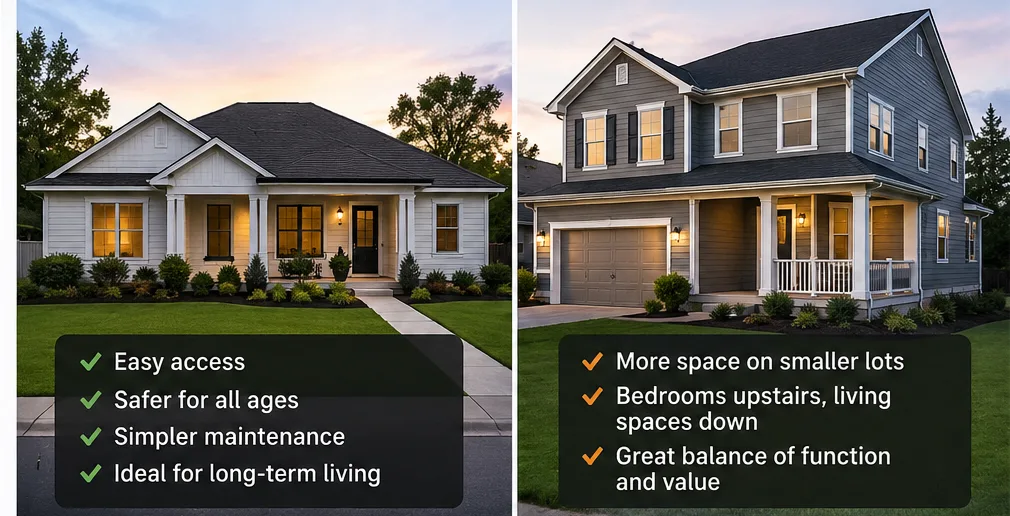
When shopping for a home, square footage often gets all the attention. But one feature that deserves just as much consideration is the number of stories.
A home’s layout affects everything from daily convenience and maintenance costs to resale value and long-term livability. While one- and two-story homes remain the most popular choices for good reason, three-story homes—and taller—can introduce challenges that many buyers don’t consider until after they’ve moved in.
Here’s what you should know before making your next home purchase.
One-Story Homes: Convenience Above All
Single-story homes continue to be one of the most desirable home styles, especially for families planning to stay in their home long term.
Benefits
- No stairs to climb every day
- Easier for children, seniors, and people with mobility concerns
- Simpler maintenance
- Faster evacuation during emergencies
- Often easier to clean and maintain
Drawbacks
The biggest downside is usually cost.
Since everything is spread across one level, one-story homes require larger lots and bigger foundations. That can make them more expensive in neighborhoods where land is limited.
Two-Story Homes: The Best Balance
For many buyers, two-story homes offer the ideal combination of affordability and functionality.
Bedrooms can remain upstairs while entertaining areas stay downstairs, creating natural separation between living and sleeping spaces.
Advantages
- More living space on a smaller lot
- Lower construction costs per square foot
- Better privacy
- Higher curb appeal in many neighborhoods
- Strong resale demand
For growing families, a two-story home often provides the flexibility needed without introducing significant inconveniences.
Three-Story Homes: More Floors, More Problems
Three-story homes certainly have their place, particularly in dense urban areas where land is expensive.
However, buyers should understand the tradeoffs before assuming more floors automatically mean a better home.
Daily Stairs Add Up
It may not seem like a big deal during a showing, but climbing two or three flights of stairs multiple times every day gets old quickly.
Forgot your phone upstairs?
Need laundry from another floor?
Putting groceries away?
You’ll be making far more trips than you expect.
Moving Furniture Becomes Difficult
Moving furniture becomes significantly more difficult in three-story homes, and this is one of the most underestimated drawbacks during the buying process. What looks like a minor inconvenience during a walkthrough often turns into a recurring logistical issue once the home is occupied.
Large items such as couches, sectionals, king-size mattresses, dining tables, refrigerators, washers, dryers, and treadmills become much harder to maneuver through narrow staircases, tight landings, and sharp turns. Even when items technically fit, the angle and clearance required can make moving them upstairs or downstairs a slow, physically demanding process that often requires multiple people or professional movers.
Over time, many homeowners realize that certain furniture either cannot be moved into the home at all or must be replaced with smaller or modular alternatives. This can limit design flexibility, increase replacement costs, and create long-term frustration when renovating, redecorating, or simply trying to rearrange living spaces.
Maintenance Costs Increase
More stories typically mean:
- More roofing complexity
- More exterior painting
- More difficult window cleaning
- Higher repair costs
- Additional HVAC considerations
Many repairs require taller ladders or specialized equipment, increasing labor costs.
Accessibility Can Become a Problem
A home that works perfectly today may become less practical years from now.
As homeowners age—or if someone experiences an injury—multiple flights of stairs can quickly become a major obstacle.
This can also reduce your future buyer pool when it’s time to sell.
Emergency Situations
Whether it’s a fire, medical emergency, or power outage, additional stories make navigating the home more difficult.
While modern homes are built with strict safety standards, fewer stairs generally mean quicker access and easier evacuation.
Housing Prices Are Dropping in 2026: What It Means for Buyers, Sellers, and Investors
What About Resale?
One- and two-story homes tend to appeal to the broadest range of buyers.
Three-story homes often attract a more specific audience, which can mean:
- Longer time on the market
- Fewer interested buyers
- More price negotiation
- Reduced demand in suburban neighborhoods
Location always matters, but in many markets, simpler floor plans appeal to more people.
Which Home Is Right for You?
There’s no universal answer.
If you’re looking for maximum convenience and long-term accessibility, a one-story home is difficult to beat.
If you want the best balance between space, affordability, and resale value, two-story homes remain the sweet spot for most buyers.
Three-story homes aren’t necessarily bad—but buyers should understand the compromises before falling in love with the extra square footage.
Sometimes, fewer stairs lead to a better quality of life.
Final Thoughts
When buying a home, don’t just compare bedrooms and bathrooms.
Think about how you’ll actually live in the space every day.
The perfect home isn’t always the largest one—it’s the one that’s easiest to enjoy for years to come.
If you’re comparing homes with different layouts, take a moment to imagine your daily routine. That simple exercise may tell you more than the listing photos ever will.